
Connected safety for the growing biogas sector
As the global energy landscape accelerates towards decarbonisation, biogas is playing an increasingly important role in replacing fossil fuels with renewable alternatives. Produced through the anaerobic digestion of organic materials such as agricultural waste, food waste and sewage sludge, biogas is a scalable and versatile energy source – but one that brings inherent safety challenges.
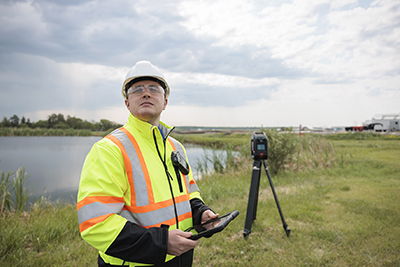 In the UK alone, there are now over 650 operational biogas plants, with further growth driven by government incentives and net-zero targets. Across Europe, the sector is even more mature, with more than 18,000 anaerobic digestion facilities contributing to renewable gas production. As investment continues to rise and operators scale their operations, safety and compliance are becoming critical priorities.
Managing risk in a high-growth sector
Biogas production involves a complex mix of hazardous gases. Methane (CH4), the primary component, is highly flammable and presents an explosion risk in confined or poorly ventilated environments. Hydrogen sulphide (H2S) is both toxic and often present at dangerous concentrations, while carbon dioxide (CO2), ammonia (NH3) and fluctuating oxygen levels create additional asphyxiation and exposure risks.
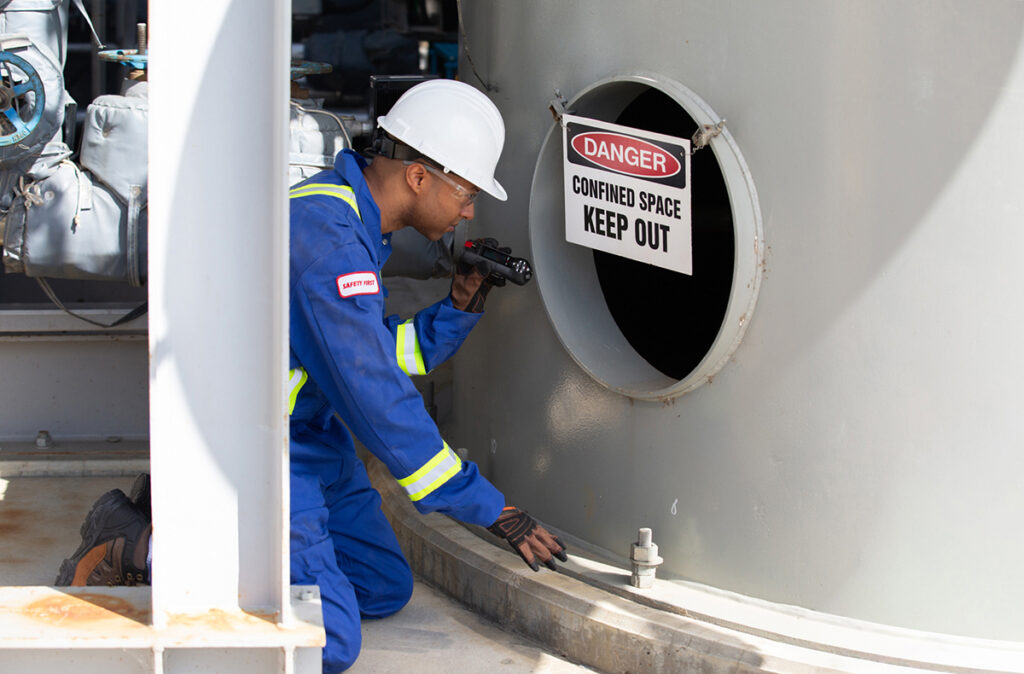
These challenges are compounded by the nature of biogas operations. Many facilities are located in rural or remote areas, where workers operate alone or in small teams. Confined space entry – for example into digesters, tanks or covered lagoons – is routine, and maintenance activities introduce further exposure risk.
At the same time, regulatory expectations are increasing. The EU Methane Regulation, introduced in 2024, is driving stricter requirements around leak detection, emissions reporting and operational transparency. Operators must not only manage safety risks in real time, but also demonstrate compliance through accurate, auditable data.
 A connected approach to safety
To meet these challenges, biogas operators are increasingly moving away from traditional stand-alone safety devices towards connected safety platforms that provide real-time visibility across their workforce and worksites.
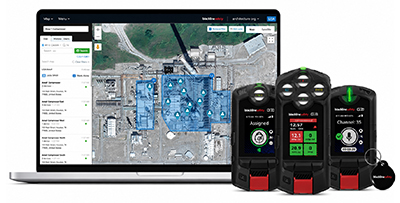
Blackline Safety’s connected safety technology is designed to support this transition. Combining wearable gas detection, lone worker protection, communication and cloud-based analytics, it enables organisations to monitor workers, hazards and incidents in real time – whether on a single site or across a distributed network of facilities.
At the centre of this approach is the G8 wearable, a next-generation connected gas detection device designed for high-risk industrial environments. It allows operators to select the gas configuration that best suits their site requirements, covering the full range of gases typically encountered in anaerobic digestion environments. Sensors are engineered to perform reliably in the humid and corrosive conditions common to biogas plants, reducing false alarms and improving confidence in readings.
Importantly, the device adapts to the way biogas sites operate. A single unit can be used for both confined space entry and routine monitoring, removing the need for workers to carry multiple instruments. This simplifies operations while maintaining continuous protection across different tasks.
 Simplifying safety for frontline teams
One of the key advantages of connected safety technology is the consolidation of multiple safety functions into a single device.
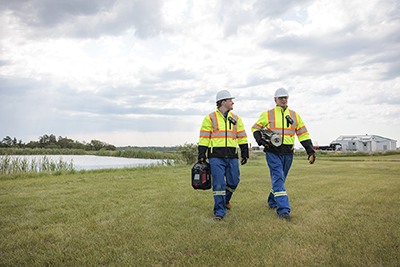
Traditionally, workers may carry a gas detector, a two-way radio and a mobile phone. In biogas environments, this creates both operational complexity and potential safety risks, particularly where non-intrinsically safe devices are used in explosive atmospheres.
By integrating gas detection, communication and lone worker monitoring into one device, solutions such as G8 eliminate the need for additional equipment while ensuring workers remain connected at all times. Built-in push-to-talk communication, emergency alerts and precise location tracking mean that if an incident occurs, response teams have immediate visibility of what is happening and where.
For safety managers, this creates a step change in situational awareness. Through cloud-based platforms, it is possible to view real-time data on worker location, gas exposure and device status, enabling faster decision-making and more co-ordinated emergency response.
Extending protection across the site
In addition to personal wearables, area monitoring plays an important role in managing risk across biogas facilities.
Portable, connected area monitors can be deployed around digesters, gas storage units and confined space entry points to provide continuous, unmanned monitoring of hazardous conditions. These devices stream data directly to the cloud, offering early warning of gas build-up and enabling proactive intervention before thresholds are exceeded.
This layered approach – combining personal monitoring with portable area monitoring – provides comprehensive coverage across the site, supporting both worker safety and regulatory compliance.
Real-world impact
The benefits of connected safety are already being realised within the utilities sector.
Northumbrian Water Group, which operates water treatment and biogas facilities across the UK, deployed connected wearables and area monitors to replace a combination of stand-alone gas detectors and communication devices. By consolidating these systems, the organisation simplified operations while improving safety oversight.
On one site, an area monitor identified previously undetected gas levels approaching the explosive limit, triggering an immediate stop-work response and safe evacuation. This kind of real-time visibility demonstrates how connected safety can move organisations from a reactive to a proactive safety approach.
Supporting the future of renewable energy
As the biogas sector continues to grow, the ability to manage risk while maintaining operational efficiency will be essential.
Connected safety technology offers a clear path forward, enabling organisations to protect their workers, meet evolving regulatory requirements and operate with greater confidence in increasingly complex environments. By providing real-time data, improving visibility and simplifying safety processes, it supports the safe expansion of renewable energy infrastructure – ensuring that as the sector grows, safety standards keep pace.
Blackline Safety will be exhibiting at the World Biogas Expo at Stand A42, showcasing its full range of connected safety solutions for the biogas and renewable energy sector.
T +44 (0)1787 222684
eusales@blacklinesafety.com
www.blacklinesafety.com